Dog Hot Spots: A Complete Guide
A small red patch can turn into a moist, painful sore within hours when a dog keeps licking or scratching it. That is what makes hot spots so frustrating. They can appear suddenly and grow much faster than many pet parents expect.
Hot spots are common skin lesions often triggered by allergies, fleas, trapped moisture, ear infections, or another source of irritation. Once the licking and scratching begin, the skin becomes increasingly inflamed and may develop an infection.
At Good Dog Veterinary Care, we provide all-dog veterinary services in Atlanta, Georgia, and help pet parents identify and treat painful skin problems before they become more serious. Explore our locations and get in touch here:
Quick Answer
Dog hot spots are red, moist, inflamed areas of skin caused by repeated licking, chewing, or scratching.
Allergies, fleas, ear infections, trapped moisture, matted fur, and other sources of irritation can start the problem. Hot spots may spread quickly and become painful or infected.
Veterinary treatment may be needed to:
- Stop the itchiness and licking
- Clean and dry the affected skin
- Treat an infection
- Identify and manage the original cause
Contact your veterinarian when the area is spreading, bleeding, draining, producing an odor, or causing noticeable pain.
What Are Hot Spots on Dogs?
Hot spots are areas of inflamed and damaged skin. They are medically known as acute moist dermatitis or pyotraumatic dermatitis.
They usually begin when something makes the skin itchy, painful, or uncomfortable. The dog responds by licking, chewing, or scratching the area. That repeated irritation damages the skin and adds moisture, making the problem worse.
The basic cycle looks like this:
- Something irritates the skin.
- The dog licks or scratches the area.
- The skin becomes damaged and moist.
- The irritation and inflammation increase.
- The dog keeps licking, making the spot larger.
A hot spot can grow noticeably within hours. Breaking this cycle is one of the most important parts of treatment.
What Do Dog Hot Spots Look Like?
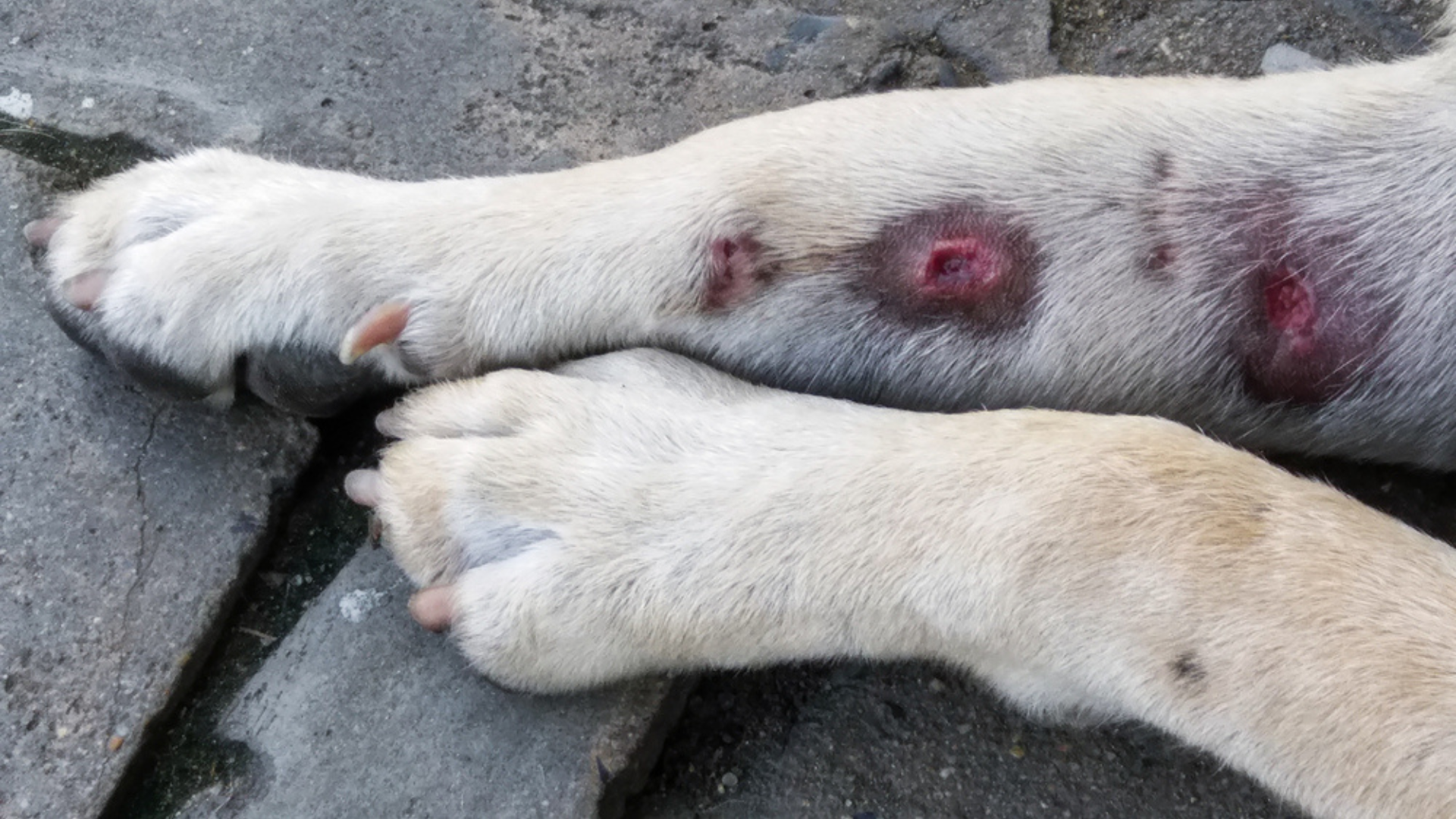
Dog hot spots commonly appear as red, raw, or inflamed areas of skin.
Other signs may include:
- Moisture or oozing
- Hair loss
- Swelling
- Crusting
- Discharge
- Unpleasant odor
- Pain when touched
Hot spots often develop near the ears, neck, hips, legs, or base of the tail. They can also remain hidden beneath thick or matted fur until an owner notices dampness, odor, hair loss, or repeated licking.
Not every red or irritated area is a hot spot. Ringworm, mange, bacterial infections, yeast infections, insect bites, wounds, and other skin conditions can look similar.
Appearance alone may not reveal the cause. You can also learn about other common skin changes in our guide to lumps, cysts, and growths on dogs.
What Causes Hot Spots on Dogs?
A hot spot is usually the result of another problem making the dog itchy or uncomfortable.
Finding that underlying cause matters. The visible sore may heal, but another one can develop if the original source of irritation remains.
Allergies and Fleas
Environmental allergies, food allergies, and flea allergies can all cause persistent itching.
A dog may repeatedly scratch or chew the same area until the skin becomes raw and moist. Dogs with flea allergies can react strongly to even a small number of bites.
Other insect bites may also create a localized area of itching that starts the same cycle.
Ear Infections
An ear infection can cause intense itchiness, pain, and irritation.
Dogs may scratch around the ear flap, side of the face, or neck. That repeated scratching can create a hot spot behind or beneath the ear.
Head shaking, odor, redness, discharge, and sensitivity around the ear may indicate that the skin problem is connected to an ear infection.
Read more about common dog ear infection symptoms.
Moisture and Matted Fur
Water trapped against the skin can contribute to hot spots, especially in dogs with long, thick, or double coats.
Common situations include:
- Swimming
- Bathing
- Playing in the rain
- Spending time in humid weather
A dog’s outer coat may feel dry while the fur close to the skin remains damp.
Matted fur makes the problem worse by trapping moisture and limiting airflow. Mats can also pull on the skin and make the dog chew or scratch at the area.
Dry your dog thoroughly after swimming or bathing, and pay attention to areas around the ears, neck, hips, skin folds, and other places where moisture may remain trapped.
Skin Infections and Other Irritation
Bacterial or yeast infections can make the skin itchy enough to start repeated licking. An infection may also develop after the dog has already damaged the skin.
Other possible triggers include:
- Anal gland discomfort
- Joint or back pain
- Insect bites
- Minor wounds
- Boredom
- Stress
- Repetitive licking
Dogs sometimes lick an area because it hurts rather than because the skin itself is itchy. A dog with joint pain, for example, may repeatedly lick one leg or hip until the skin becomes irritated.
Behavioral licking can also damage the skin, but boredom or stress should not automatically be blamed. Allergies, pain, parasites, and infection should first be considered as possible causes.
When Should a Dog Hot Spot Be Seen by a Veterinarian?
Hot spots can spread fast, especially when a dog keeps licking or scratching the area. Veterinary care is recommended when the spot:
- Grows quickly
- Bleeds or produces discharge
- Develops an unpleasant odor
- Looks very painful
- Appears near the eye or ear
- Does not begin improving
- Keeps returning
- Cannot be protected from licking
You should also contact your veterinarian if your dog develops low energy, reduced appetite, swelling, fever, or noticeable behavior changes.
A small skin problem can become much harder to treat once infection or deeper irritation develops. Early care can help stop the cycle before the lesion gets larger.
Why Recurring Hot Spots Matter
Repeated hot spots usually point to an unresolved issue.
Common causes include:
- Allergies
- Fleas
- Chronic ear infections
- Bacterial or yeast infections
- Joint or back pain
- Moisture trapped in the coat
- Repetitive or compulsive licking
Treating the visible sore may help temporarily, but the hot spot can return if the original trigger is still present.
How Are Dog Hot Spots Treated?
Treatment depends on the size of the hot spot, how painful it is, whether infection is present, and what caused it.
Veterinary care may include:
- Carefully clipping fur around the affected area
- Cleaning and drying the skin
- Preventing licking with a recovery cone
- Relieving itch, pain, and inflammation
- Treating a bacterial or yeast infection when needed
- Managing the underlying allergy, flea problem, ear infection, or other cause
The goal is not only to heal the sore. It is also to stop the itch and prevent another hot spot from developing.
What Owners Can Do Before the Appointment
Until your dog can be examined:
- Use a properly fitted recovery cone to prevent licking.
- Keep the affected area dry.
- Avoid swimming and bathing.
- Do not apply human creams or medications without veterinary guidance.
- Do not use scissors or clippers around the lesion.
Hot spots can be painful. Even a normally calm dog may pull away, growl, or react when the area is touched. Avoid handling the sore more than necessary.
How to Prevent Hot Spots From Returning
The best way to prevent hot spots is to identify and manage what caused the itching or irritation.
Helpful steps include:
- Keep your dog on consistent flea prevention.
- Address ongoing allergies and itch.
- Dry your dog thoroughly after swimming or bathing.
- Keep up with regular grooming and remove mats safely.
- Check the ears and skin for redness, odor, moisture, or hair loss.
- Speak with your veterinarian about repeated licking, scratching, or possible pain.
Pay attention when your dog suddenly begins focusing on one area. Catching the licking early may help prevent the skin from becoming raw and inflamed.
Frequently Asked Questions About Dog Hot Spots
Can a Dog Hot Spot Heal on Its Own?
A small, early hot spot may improve if the licking stops and the irritation is minor.
However, hot spots can spread or become infected quickly. Contact your veterinarian if the area is painful, moist, growing, or not improving.
Are Dog Hot Spots Contagious?
Hot spots themselves are generally not contagious.
However, some skin conditions that look similar, including certain fungal or parasitic infections, may spread between animals. A veterinary examination can help confirm what is causing the lesion.
How Quickly Can a Hot Spot Spread?
A hot spot can become noticeably larger within hours.
Continued licking, chewing, and scratching add moisture and damage the skin, allowing the irritated area to spread quickly.
Should I Cover My Dog’s Hot Spot?
Covering a hot spot may trap moisture and make the area more irritated.
A recovery cone is often a safer way to stop licking unless your veterinarian recommends a specific covering or bandage.
Can I Use Human Cream on a Dog Hot Spot?
Do not use human creams or medications unless your veterinarian specifically approves them.
Some products can irritate the skin, delay healing, or be unsafe when your dog licks them.
Why Does My Dog Keep Getting Hot Spots?
Recurring hot spots often mean the original cause has not been controlled.
Possible triggers include allergies, fleas, ear problems, trapped moisture, skin infections, pain, or repetitive licking. Your veterinarian can help identify the pattern and recommend a longer-term plan.
Help Your Dog Find Relief From Hot Spots
Hot spots can spread quickly, become painful, and return when the underlying cause is not treated. Early attention can help prevent a small irritated patch from becoming a larger skin problem.
Watch for repeated licking, damp fur, redness, odor, or sudden hair loss. Keeping the coat dry, managing fleas and allergies, and addressing ongoing discomfort can reduce the chance of future hot spots.
If your dog has a painful, moist, or rapidly growing skin lesion, contact Good Dog Veterinary Care. Our all-dog veterinary teams can examine the area, treat the irritation, and help identify what caused it. Reach out to one of our three Atlanta area practices:
Subscribe to our newsletter
Stay up-to-date with the latest in veterinary care, tips for your dog’s health, and news from Good Dog Veterinary Care. Subscribe to our newsletter for expert insights, special updates, and exclusive offers delivered right to your inbox.