What are the Lumps on my Dog? How to Check for Lumps

Lumps on dogs are common, and finding one does not automatically mean cancer. That said, any new lump should still be checked by a veterinarian. This guide will help you understand what lumps can be, what to look for at home, and how to check them the right way without jumping to conclusions. If you find a lump on your dog, it is always better to get a clear answer instead of guessing. At our veterinary practice in Smyrna, GA, our team can evaluate the lump, perform the right testing, and help you understand exactly what you are dealing with. We also care for dogs from West Cobb and East Cobb, providing the same focused, dog only veterinary service across all locations.
Finding a new lump on your dog can bring plenty of questions. Soft tissue surgery is a primary clinical focus for Cierra Dunham, DVM, including the evaluation and surgical removal of masses and cysts when appropriate.
What Are Lumps on Dogs?
Not all lumps are the same
Lumps on dogs can mean a lot of different things. Some are benign, which means they are not cancerous. Others are malignant, which means they are cancerous and may need faster treatment. Some lumps are not tumors at all and are instead related to inflammation, infection, irritation, or swelling under the skin.
That is why the word “lump” by itself does not tell you very much. It only describes what you can feel or see, not what the growth actually is.
Why you cannot diagnose at home
One of the biggest mistakes dog owners make is assuming a lump is harmless just because it feels soft or looks small. Appearance is not reliable. Some benign lumps can look alarming, and some serious lumps can seem pretty ordinary at first.
Even veterinarians usually need testing to confirm what a lump is. That may mean collecting cells from the lump or recommending further evaluation. The goal is not to panic. It is to be smart and get real answers.
Common Types of Lumps on Dogs
Benign lumps
Some lumps turn out to be benign and may only need monitoring, depending on size, location, and whether they are bothering your dog.
Common examples include lipomas, which are soft fatty lumps, cysts that form under the skin, papillomas (warts), skin tags, and histiocytomas (small button-like growths seen most commonly in younger dogs, but can be seen in dogs of all ages). These can all look a little different, which is another reason home guessing is tough.
Infection or inflammation related lumps
Not every lump is a tumor. Some are caused by infection or irritation. Abscesses can form when infection builds up under the skin. Allergic reactions and bug bites can cause raised areas or swelling. In some cases, a lump is simply localized inflammation rather than a growth.
These types of lumps can still need treatment, especially if they are painful, growing quickly, or bothering your dog.
Cancerous lumps
Some lumps on dogs are cancerous. Examples include mast cell tumors, melanoma, and other malignant growths. The tricky part is that cancerous lumps don’t all look the same. Some are firm. Some are soft. Some are red, raised, or irritated. Others can feel pretty subtle at first.
This is why the safest mindset is simple. Stay calm, but do not assume.
How to Check a Lump on Your Dog
Step 1: Feel the lump
Start by gently feeling the area. Is the lump soft or firm? Does it move easily under the skin, or does it feel fixed in place? Does your dog react when you touch it, or does it seem painless?
You are not trying to diagnose it on your own. You are just gathering useful observations that can help your veterinarian.
Step 2: Look closely
Take a close look at the lump. Notice the size, shape, color, and whether the surface looks smooth, irritated, crusty, or ulcerated. Also check whether the skin around it looks normal or inflamed.
Small details like this can be helpful when you explain what you found.
Step 3: Track changes over time
Once you notice a lump, start tracking it. Measure it so you have a baseline. Take a clear photo. Write down when you first noticed it and whether it changes in size, shape, texture, or appearance.
This matters because change is one of the biggest things your veterinarian will want to know.
Step 4: Check for multiple lumps
Do not stop at the first one. Run your hands over the rest of your dog’s body to see if there are multiple lumps. One lump and several lumps can mean very different things, and that context can be important during the exam.
A full body check also helps you catch other changes you may not have noticed yet.
Warning Signs You Should Not Ignore
Rapid growth
A lump that gets bigger quickly should not be brushed off. Fast change does not automatically mean cancer, but it does mean the lump needs to be checked sooner rather than later.
Pain or sensitivity
If your dog pulls away, winces, licks at the area, or seems uncomfortable when the lump is touched, that matters. Pain can point to inflammation, infection, irritation, or a more serious issue.
Bleeding or discharge
A lump that starts bleeding, oozing, crusting, or draining fluid needs veterinary attention. That kind of change can happen with infected areas, irritated growths, or masses that are breaking down.
Changes in behavior
Sometimes the lump itself is only part of the picture. If your dog also seems lethargic, less interested in food, less playful, or just not like themselves, do not ignore that. A change in behavior can help show whether the issue is more than skin deep.
Location concerns
Some locations matter more because of how they affect comfort and function. Lumps near the mouth can interfere with eating. Lumps near joints can affect movement. Lumps near lymph node areas may deserve closer evaluation because of what those locations can sometimes suggest.
When to See a Vet
The general rule
Any new lump should be checked. That does not mean every lump is an emergency, but it does mean every lump deserves a proper exam instead of guesswork at home.
When it is more urgent
Some situations should move up the timeline. A lump that is fast growing, painful, bleeding, or interfering with movement or breathing should be seen more quickly. The same is true if your dog seems unwell overall.
If you need a veterinarian in Smyrna GA, West Cobb and East Cobb Good Dog Veterinary Care is here to help.
What Your Vet Will Do
Physical exam
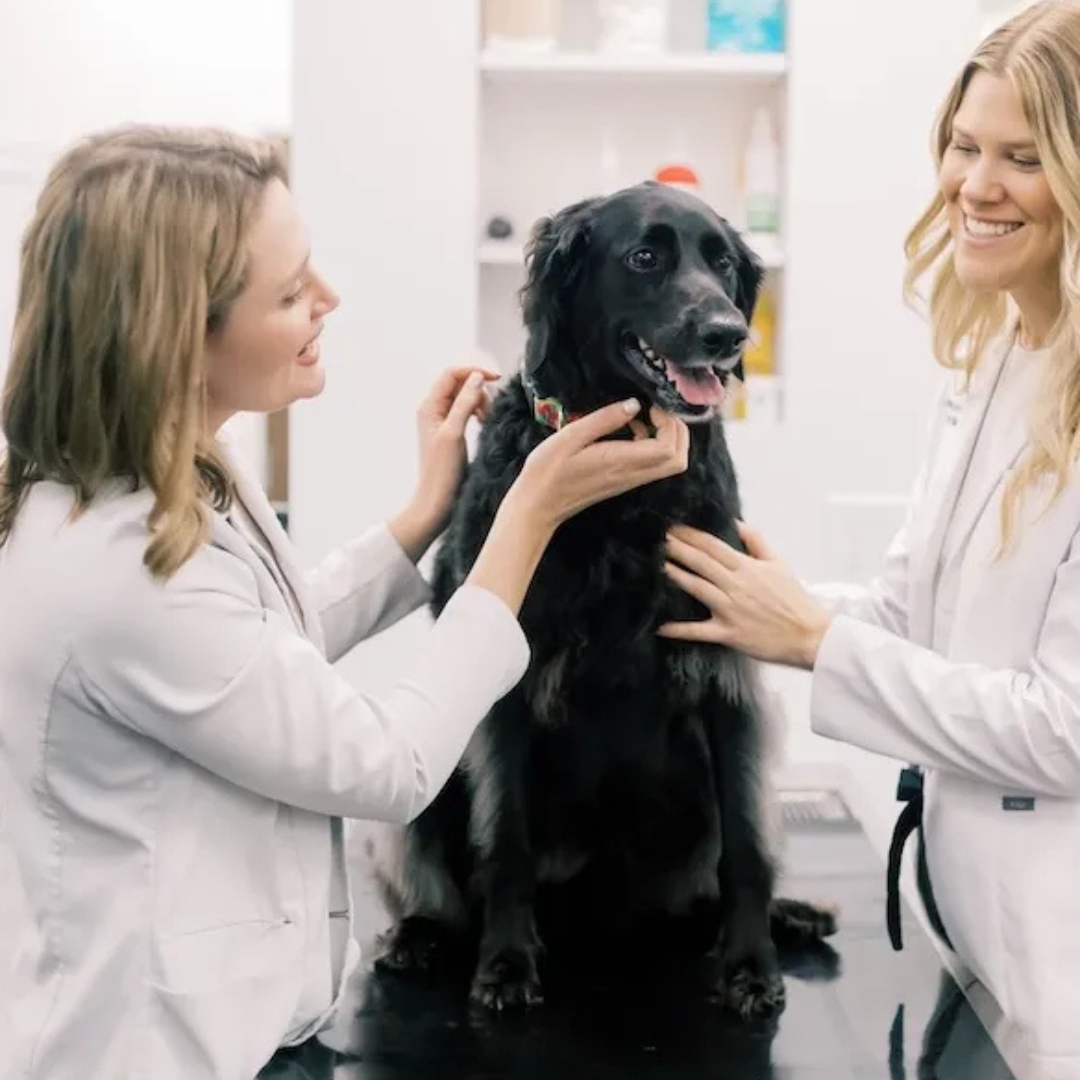
The first step is a hands-on exam. Your veterinarian will look at the lump, feel its texture and mobility, and ask when you first noticed it and whether it has changed.
Fine needle aspiration (FNA)
A fine needle aspiration, often called an FNA, is one of the most common next steps. It is quick, common, and minimally invasive. A small needle is used to collect cells from the lump so they can be looked at more closely under the microscope.
Biopsy if needed
If the lump cannot be clearly identified with an FNA, or when more information is needed since FNA is only a small piece of the picture and often cannot provide a definitive diagnosis on its own, a biopsy may be recommended. That means taking a tissue sample, or sometimes removing the lump, so it can be properly analyzed at the laboratory by a pathologist.
Imaging in certain cases
In some cases, imaging may also be useful. This can help if the lump is deep, in a tricky location, or if there is concern about how far it extends.
The important thing to remember is that the process is usually very manageable. The goal is to stop guessing and get a real answer.
What Happens After Diagnosis
Monitoring
Some lumps do not need immediate treatment. If a lump is benign and not causing problems, your veterinarian may recommend monitoring it for growth or change.
Removal
Some lumps should be removed because of their type, location, size, or rate of change. Removal may also be recommended if the lump is bothering your dog or creating uncertainty.
Medication or treatment
If the lump is related to infection, inflammation, or another medical issue, treatment may involve medication instead of surgery. In other cases, more advanced treatment may be recommended depending on the diagnosis.
Ongoing tracking
Even after a diagnosis, tracking still matters. Keeping an eye on the area and watching for new lumps or changes helps support early action if anything shifts.
Can You Prevent Lumps on Dogs?
Not preventable
Some happen with age, genetics, skin changes, or conditions that are simply outside your control.
Importance of routine checks
What you can do is stay observant. Routine checks help you find changes earlier, which makes it easier to get answers before a lump grows, becomes irritated, or starts affecting your dog’s comfort.
Early detection matters
Early detection does not just help with serious problems. It also helps avoid unnecessary stress by identifying harmless lumps sooner and giving you a clear plan.
Simple At Home Lump Check Routine
Weekly quick check
Once a week, take a minute to run your hands over your dog’s body. Check under the legs, around the neck, along the belly, and over the chest and sides. A lot of lumps are found by touch before they are obvious by sight.
Monthly deeper check
Once a month, do a more thorough inspection. Part the hair if needed and look closely at any spots that feel different. Check the legs, paws, armpits, chest, belly, neck, and around the mouth.
Keep a simple log
If you find something, keep it simple. Write down the size, location, and any changes you notice. A photo can help too. That kind of record is useful if the lump changes or if your veterinarian wants to compare it over time.
Frequently Asked Questions About Lumps on Dogs
What causes lumps on dogs?
Lumps on dogs can be caused by many things, including fatty growths, cysts, infections, allergic reactions, or cancer. The cause cannot be confirmed just by looking at it, which is why evaluation matters.
Are all lumps on dogs cancer?
No. Many lumps are benign and do not pose a serious health risk. However, some can be cancerous, and the only way to know the difference is through veterinary testing.
How do I know if a lump on my dog is serious?
You cannot reliably tell at home. Warning signs like rapid growth, pain, bleeding, or behavior changes can increase concern, but even harmless looking lumps should still be checked.
Should I take my dog to the vet for a lump?
Yes. Any new lump should be evaluated by a veterinarian. It does not always need urgent care, but it should not be ignored.
Can I monitor a lump at home instead of going to the vet?
You can track changes like size and appearance, but monitoring should not replace an exam. A veterinarian can determine what the lump actually is and whether monitoring is appropriate.
What is a fine needle aspiration?
A fine needle aspiration is a quick test where a small needle is used to collect cells from a lump. Those cells are then examined under a microscope to help identify what the lump is.
Can I pop a lump on my dog?
No. You should not try to pop a lump. This can cause pain, infection, or make the situation worse. Always have a veterinarian evaluate the lump first.
Do lumps on dogs go away on their own?
Some do, especially those related to minor irritation or immune responses. Others may stay the same or grow over time. That is why tracking and proper diagnosis are important.
What does a cancerous lump feel like on a dog?
Cancerous lumps can feel firm, fixed, or irregular, but they can also feel soft in some cases. There is no reliable way to identify cancer based on feel alone.
How fast do dog lumps grow?
Some lumps grow slowly over months or years, while others can grow quickly. Rapid growth is a reason to get a lump checked sooner.
Final Thoughts
Stay calm, but stay proactive. Most lumps are not emergencies, but ignoring them is still a mistake. The smartest move is to notice them early, track what you are seeing, and get a veterinary opinion before making assumptions.
Looking for a dependable west marietta veterinary clinic to check a lump on your dog? Contact Good Dog Veterinary Care to schedule an evaluation and get clear answers. We also care for dogs from Smyrna and East Cobb, offering the same focused, dog only veterinary service across all locations.
Subscribe to our newsletter
Stay up-to-date with the latest in veterinary care, tips for your dog’s health, and news from Good Dog Veterinary Care. Subscribe to our newsletter for expert insights, special updates, and exclusive offers delivered right to your inbox.